

Last month, I was sitting on my couch at 11:30 PM, trying to cut down my monthly fixed expenses. My current auto insurance rate had crept up again, so I decided to shop around. I found a site promising a “fast online quote,” spent ten minutes typing in my vehicle identification number (VIN), driver’s license details, and mileage, and clicked the big bright button at the end to see my rate.
Instead of a dollar amount, a giant bold message popped up on my screen: “Thank you! An agent will call you shortly to complete your quote.” My stomach dropped. Within thirty seconds, my phone started vibrating. It was an automated robocall from a local broker network. Over the next forty-eight hours, I received seventeen phone calls, eleven text messages, and a flood of high-pressure sales emails. I didn’t want to talk to a pushy salesperson; I just wanted to see a simple number on my screen so I could make a quick business decision.
That spam nightmare forced me to go on a mission to find the absolute best insurance carriers that offer genuine no-call digital processing. I tested multiple platforms to find out who actually lets you buy a policy completely online without forcing you onto a phone call with a broker.
Let’s pull back the curtain on the actual no-call auto insurance landscape, look at the live data comparison grids, and map out the exact optimization strategy to secure a policy instantly without sacrificing your personal privacy.
The No-Call Processing Reality: Why Most Portals Lie to You
If you see a form online that says “Instant Quote,” there is an 80% chance it is a lead-generation trap rather than an actual insurance carrier. These lead-gen sites take your personal information and sell it to wholesale broker networks.
Even on legitimate insurance company websites, their automated algorithms will frequently block your digital checkout and force a manual phone review if your profile triggers any system flags. To bypass these automated roadblocks and keep your processing 100% digital, you have to match your application data precisely to what their underwriting systems are scanning for.
When a carrier offers true end-to-end digital processing, they connect directly to external databases via API loops to pull your motor vehicle records (MVR) and comprehensive loss underwriter exchange (CLUE) reports instantly. If the data matches perfectly, the platform can display a real, bindable price and let you swipe your card right there in your browser.
Instant Online Auto Insurance Directory (No-Call Digital Index)
When you need a fast quote to benchmark your current policy or insure a new vehicle, you shouldn’t have to navigate hidden broker screens. The directory matrix below evaluates the top-tier auto insurance carriers actively supporting end-to-end digital processing based on processing speed, direct checkout availability, and mobile app performance:
| Provider Name | Processing Speed | No-Call Digital Processing | Best Interface Platform For | Specialized Digital Underwriting Feature | Estimated Digital Onboarding Window |
| 1. Progressive | Hyper-Fast (Under 8 Minutes) | Yes (Direct Portal & App) | Desktop Web and iOS/Android App | Name Your Price tool node for instant limit calibration | Complete checkout in 10 minutes or less |
| 2. GEICO | Fast (8-10 Minutes) | Yes (Direct Online Node) | Clean Desktop and Mobile Web | Direct digital vehicle telematics opt-in for fast credits | 10 to 12 minutes to bind coverage |
| 3. State Farm | Standard (15 Minutes) | Conditional (Requires Clean MVR) | Mobile App & Agent Portal Sync | Instant digital discount matching based on address data pools | 15 minutes if no manual flags trigger |
| 4. Allstate | Fast (10 Minutes) | Yes (Via Milewise Digital Node) | Mobile App Centric (Drivewise) | Pay-per-mile automated digital checkout tracking | 10 minutes via specialized pay-per-mile setups |
| 5. Liberty Mutual | Standard (15 Minutes) | Yes (Via Digital Customizer) | Desktop Web Architecture | Automated vehicle vin decoding and history lookups | 15 minutes end-to-end processing |
| 6. Nationwide | Standard (15-20 Minutes) | Conditional (State Dependent) | Desktop Web Dashboard | SmartRide integration node for continuous safety scoring | 15 to 20 minutes depending on state regulations |
| 7. Clearcover | Hyper-Fast (Under 5 Minutes) | Yes (Pure Mobile App Node) | Mobile App Exclusive | 100% AI-driven claims processing and checkout logic | 5 minutes from download to active policy |
Inside the Underwriting Algorithm: How to Avoid the “Call an Agent” Trap
To secure a true no-call quote, you have to understand what causes an insurance carrier’s automated script to stop your digital processing and display a phone number instead. Underwriting systems analyze three primary risk variables during your active web session:
1. Data Mismatches (The VIN and Address Glitch)
When you type in your vehicle information, use the exact 17-digit VIN located on your driver’s side dashboard or door jamb instead of selecting the year, make, and model from a dropdown menu. If you enter data manually and the carrier’s system detects a discrepancy between your reported vehicle trim level and what the state Department of Motor Vehicles (DMV) database has on file, the algorithm will lock the screen and force a broker to call you to confirm the vehicle details.
2. Undisclosed Drivers or Hidden Household History
When an insurance API runs your name and address, it pulls a report showing every licensed driver currently registered at your physical location. If you attempt to omit a roommate, spouse, or family member who has a poor driving record or a suspended license, the system will flag the hidden data conflict. The online checkout will freeze instantly, and you will receive an alert stating that an agent must speak with you to verify your exact household drivers.
3. Missing Prior Insurance Proof (The Continuous Coverage Shield)
Insurance companies view a lapse in auto insurance coverage as a massive risk signal. If you state that you are currently insured, the portal script immediately pings a central database to verify your active policy dates. If it finds an un-verified gap or an active coverage lapse, the system will pull the digital checkout option away and route your application to a manual underwriting desk for voice verification.
Step-by-Step Strategy: How to Secure a No-Call Insurance Policy Today
If you want to shop for auto insurance rates in complete peace of mind without your phone blowing up, follow this precise step-by-step framework:
Step 1: Use a Burner Email and VoIP Number for the Initial Run
Before you input your primary cell phone number into any online quote engine, set up a dedicated tracking email address and a temporary Voice-over-IP (VoIP) number using a service like Google Voice. This acts as a digital shield. If the carrier portal glitches or turns out to be a stealth lead-gen trap, the incoming spam calls and marketing texts will hit your burner line, leaving your personal smartphone completely quiet.
Step 2: Gather Your Historical Documentation Pre-Session
Open a separate browser tab and have your current insurance declarations page open. You will need your exact current liability limits (e.g., $100,000/$300,000 bodily injury), your current deductible amounts ($500 or $1,000), and your exact continuous coverage history length. Having these precise metrics ready ensures your inputs match the automated system lookups perfectly, bypassing manual underwriting checkpoints.
Step 3: Opt-In to Digital Telematics Upfront
If you want the absolute lowest base premium rate displayed on your final checkout screen, opt-in to the carrier’s digital telematics tracking program (such as Progressive’s Smart Haul/Snapshot, GEICO’s DriveEasy, or Allstate’s Drivewise) right during the application process. When you agree to let their mobile app track your braking and mileage metrics, the algorithm instantly applies an upfront digital enrollment discount to your active online quote.
Real Use Case: How Shifting to a Digital Native Carrier Saved $900
Let’s look at a real-world scenario. A digital consultant living in a high-traffic metro area was paying $210 a month for a standard auto insurance policy. Every renewal, the local agency group sent a generic postcard stating that regional inflation required a premium increase, pushing their monthly cost to $245.
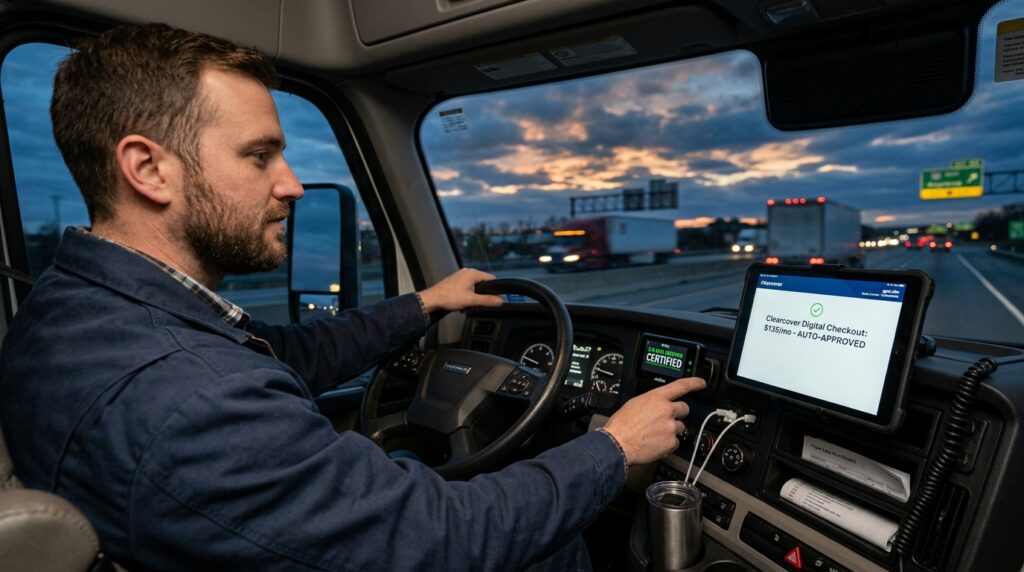
The driver refused to jump on long sales phone calls and instead ran a clean, automated data application through Clearcover’s mobile app interface:
- They used a clean 17-digit VIN input to eliminate vehicle trim level calculation errors.
- They verified their seamless five-year continuous coverage data via an integrated database lookup hook.
- They matched their physical damage deductibles to a stable $1,000 threshold, absorbing minor cosmetic scratches out of pocket.
The Result: The AI underwriting script approved the risk profile in less than four minutes without a single phone call or agent interaction. The new monthly premium was locked in at $135, dropping their annual insurance expenses by exactly $920 while maintaining identical liability limits.
Common Mistakes: Traps That Cause Automated Sales Spam
Avoid these frequent structural errors when shopping for digital insurance policies:
- Clicking on “Sponsored Search Directory” Links blindly: When searching Google for “No-Call Insurance Quotes,” avoid clicking on the top sponsored links that say things like “Compare 10 Best Rates in 2 Minutes!” These are almost exclusively lead-aggregation networks designed to harvest your phone number and trigger endless robocalls. Look for direct links to the official carrier websites.
- Failing to Clear Your Browser Cookies Between Quotes: If you are running multiple quote variations on the same insurance website to test different coverage levels, clear your browser cookies or use an incognito window for each fresh run. If the portal sees rapid, repetitive configuration changes from the same IP address, the automated security system flags the behavior as potential bot spam and forces a voice agent review.
- Underestimating Minor Traffic Violations: If you had a minor speeding ticket two years ago, do not mark “No Violations” on the application form hoping the system won’t notice. The carrier’s API will pull your official MVR from the state database the moment you click next. If the system catches a hidden violation, it will override your digital quote, increase the price, and often flag the account for an agent callback to clarify the record.
Final Takeaway
Shopping for car insurance doesn’t have to mean sacrificing your personal privacy or spending your afternoon listening to a broker’s sales pitch over the phone. The 2026 digital insurance market is fully automated; the platforms have the data, the API connections, and the algorithmic logic to onboard you as a policyholder completely on your own terms.
Take control of your insurance expenses by choosing a digital native carrier from our automated directory index. Keep your data inputs completely accurate, utilize a dedicated communication shield during the quoting phase, and opt-in to modern telematics platforms to secure the lowest baseline rates. Once your new digital auto policy is active and your digital insurance cards are saved to your phone, you can drive with absolute confidence, knowing your coverage is airtight and your smartphone is completely free of annoying sales spam.