
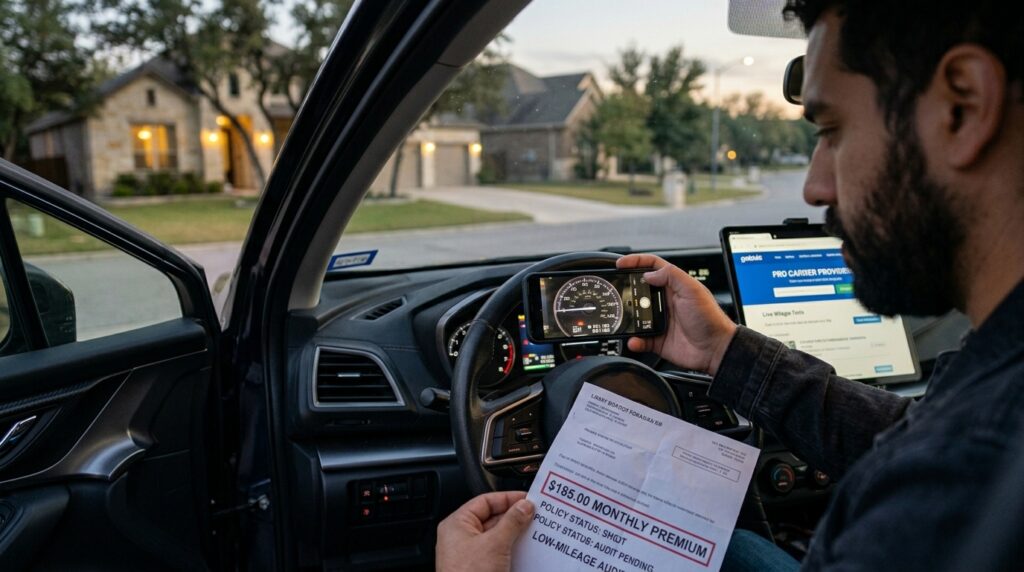
During the lockdown phase a few years ago, my car sat in the driveway for three straight months. The only time it moved was a weekly five-minute run to the local grocery store just to keep the battery from dying. One evening, while auditing my business expenses, I looked at my auto insurance bill: $185 a month.
I did some quick math and realized I was paying nearly $2.50 per mile driven. It felt completely absurd. I called my mainstream insurance agent to ask for a rate reduction since my annual mileage estimate had dropped from 12,000 miles to basically zero. The agent gave me a generic corporate response about regional rate inflation and offered me a pathetic $8 loyalty discount. That was the moment I realized the traditional auto insurance system is fundamentally broken for low-mileage drivers.
If you drive less than 8,000 miles a year—whether you work from home, use public transit, or manage a remote digital portfolio—you are actively subsidizing the high-risk, long-haul commuters who clog up the highways every single day.
That frustration forced me to look for a better alternative, leading me straight to the world of Deflationary, Pay-Per-Mile Car Insurance. This is a highly optimized micro-niche where your monthly bill drops naturally alongside your reduced vehicle usage.
Let’s pull back the curtain on how pay-per-mile algorithms actually function, analyze the top micro-niche carrier directories for 2026, and map out the exact step-by-step strategy to switch over without getting hit with hidden data tracking fees.
The Deflationary Reality: How Pay-Per-Mile Pricing Actually Works
Most people are terrified of pay-per-mile insurance because they assume their bill will fluctuate wildly or that a single long weekend road trip will result in a massive financial penalty. The reality is that deflationary insurance operates on a highly structured Split-Fee Matrix.
When you onboard with a micro-niche provider, your premium is broken down into two distinct, transparent data components:
- The Fixed Base Rate: A low, flat monthly fee (usually between $25 and $50) that covers your vehicle against non-driving asset risks like theft, vandalism, windshield cracks, or weather damage while it sits parked in your driveway.
- The Variable Per-Mile Rate: A precise micro-charge (usually between 4 and 8 cents) applied strictly to the actual miles you drive during that specific billing cycle.
Because your costs adapt directly to your real-world usage, this system forces your insurance overhead to deflate. If you go on a two-week vacation and your car stays locked in your garage, your per-mile charge drops to zero, and you only pay the baseline fixed fee.
To make this data integration work seamlessly, carriers use small plug-in hardware nodes or direct API synchronization loops to log your odometer metrics without invading your personal interior privacy.
Deflationary Car Insurance Directory (Low-Mileage Carrier Index)
When you are looking to ditch traditional inflated premiums, you shouldn’t have to wade through endless sales pitches from local brokers. The comprehensive directory matrix below evaluates the top-tier micro-niche and pay-per-mile auto underwriters based on base pricing, hardware configuration options, and low-mileage optimization:
| Provider Name | Average Base Monthly Fee | Average Per-Mile Rate | Odometer Verification Method | Best Tracking Configuration For | Complete Digital Onboarding Window |
| 1. Metromile (By Lemonade) | $29.00 – $39.00 | 5.2¢ – 7.1¢ | Pulse OBD-II Plug-in Device | Tech-savvy solopreneurs & pure remote workers | Under 7 minutes via direct app portal |
| 2. Allstate (Milewise) | $32.00 – $45.00 | 6.0¢ – 8.5¢ | OBD-II Device or Connected Car API | Drivers with modern smart vehicles (Tesla, GM, Ford) | 10 minutes via Allstate mobile dashboard |
| 3. Nationwide (SmartMiles) | $35.00 – $49.00 | 5.5¢ – 7.8¢ | Plug-in Device or Integrated Telematics | Mixed-use drivers who occasionally take road trips | 10 to 12 minutes through commercial portal |
| 4. Mile Auto | $30.00 – $40.00 | 6.5¢ – 9.0¢ | Monthly Photo Upload (No GPS tracking) | High-privacy drivers who refuse active location tracking | 5 minutes (Requires zero hardware setups) |
| 5. Liberty Mutual (By-Mile) | $38.00 – $52.00 | 5.8¢ – 8.2¢ | RightTrack OBD-II Device Node | Households with multiple low-use vehicles | 15 minutes end-to-end processing |
| 6. Hugo Insurance | On-Demand (No Base Fee) | Flat Weekly Tiers | Pure On-Demand App Toggle | Side-hustlers & drivers who only use vehicles on specific days | Instant binding via mobile app interface |

Breaking Down the Odometer Tracking: Privacy vs. Hardware Tiers
When selecting a carrier from our low-mileage directory index, you need to understand the difference between the tracking options. Selecting the wrong configuration can conflict with your tech setup or privacy preferences:
The OBD-II Plug-In Device (The Pulse System)
Carriers like Metromile send you a small device that plugs into the diagnostic port under your dashboard. It automatically tracks your exact mileage via built-in cellular data transmitters. The massive advantage here is automation: you never have to manually report data. The drawback is that it remains continuously active, though top-tier providers explicitly state they don’t use the data to monitor speed or driving style for pricing adjustments—only raw mileage counts.
The Connected Car API Integration
If you drive a modern connected vehicle (like a newer Tesla, BMW, or Ford), platforms like Allstate Milewise can sync directly with your car’s built-in factory cellular system via an API handshake. This completely eliminates the need to plug third-party hardware into your dashboard, preserving your vehicle’s clean aesthetic while ensuring perfect odometer accuracy.
The Pure Privacy Manual Mode (No-GPS Tracking)
If you are uncomfortable with an insurance company tracking your coordinates or vehicle data streams, Mile Auto is your absolute best option. They don’t use plug-in devices, mobile apps, or GPS nodes. Instead, once a month, their system sends you a text message prompt. You simply snap a quick smartphone photo of your car’s physical dashboard odometer and upload it to their secure portal. The system calculates your billing tier based on pure visual verification.
Step-by-Step Strategy: How to Transition and Maximize Low-Mileage Savings
If your vehicle spends more time parked than traveling, follow this precise step-by-step optimization framework to successfully transition to a deflationary tier:
Step 1: Run a Hard 30-Day Mileage Audit
Before you switch providers, look at your Google Maps Timeline, your work commute log, or check your odometer differences over the last month to get an accurate assessment of your mileage footprint. If your monthly distance is consistently under 650 miles (roughly 8,000 miles a year), you are in the prime target zone for pay-per-mile pricing structures.
Step 2: Verify the Daily Distance Cap Policies
Before binding a policy with a provider like Metromile or Nationwide, verify their specific Daily Mileage Cap rules. For example, Metromile caps your chargeable miles at 250 miles per day (150 miles in some states). This means if you decide to take a sudden 500-mile cross-country weekend road trip, you are only billed for the first 250 miles of that day. Understanding this cap eliminates the fear of unexpected premium spikes during holiday travel.
Step 3: Match Your Physical Deductibles to Asset Value
Since your car is spending the vast majority of its life sitting safely inside a residential garage or a designated driveway, the statistical probability of you causing a multi-car highway accident drops significantly. Capitalize on this by adjusting your collision and comprehensive deductibles up to $1,000 or $2,500. This adjustment drops your monthly fixed base rate down to rock-bottom baselines, keeping your fixed costs incredibly lean.
Real Use Case: How a Remote Worker Cut Their Insurance by 60%
Let’s look at a real-world scenario. A digital consulting professional living in Austin, Texas, transitioned to a permanent work-from-home position. Their standard premium with a traditional insurance carrier remained stuck at $190 a month, despite their real-world vehicle usage dropping down to less than 200 miles a month (mostly quick weekend errands and social outings).
The driver initiated a clean platform swap over to a pay-per-mile framework:
- They secured an online base rate of $32.00 a month plus a variable charge of 6.2 cents per mile.
- They completed an electronic API connection with their vehicle’s factory diagnostic interface to avoid third-party plug-in devices.
- They logged exactly 180 miles during their first full billing cycle.
The Financial Outcome: Their total monthly insurance invoice came out to exactly $43.16 ($32.00 base + $11.16 mileage charge). The driver maintained their exact identical liability protection thresholds but saved over $146 a month, resulting in more than $1,750 in annual savings redirected straight back into their personal investment portfolio.
Common Pitfalls: Critical Pitfalls Low-Mileage Drivers Must Avoid
Avoid these frequent operational blunders when navigating the pay-per-mile marketplace:
- Overestimating Your Mileage Thresholds: Pay-per-mile strategies are incredibly deflationary if you stay below the 8,000 to 10,000-mile annual threshold. However, if your lifestyle changes and you start a daily long-distance physical commute that pushes your annual mileage past 12,000 miles, the variable per-mile accumulation will eventually overtake standard pricing scales, making a traditional flat-rate policy cheaper.
- Unplugging the OBD-II Tracking Device to “Cheat” the System: Do not pull the plug-in tracking hardware out of your diagnostic port during a long trip hoping to hide the mileage from the underwriter. The device logs connection data. The moment you plug it back in, the system will flag the unexplained time gap, cross-reference your car’s internal odometer vault data, and automatically apply a catch-up premium charge—or cancel your policy entirely for structural fraud.
- Ignoring Out-of-State Cross-Border System Regulations: Pay-per-mile options are highly regional and governed by specific state insurance boards. If your business entity or residential location changes to a state where your current niche provider isn’t legally registered, your policy can face rapid automation terminations. Always check the provider availability map if you plan an interstate relocation.
Final Takeaway
Ditching a bloated, flat-rate car insurance policy for an optimized pay-per-mile framework is one of the smartest cash-flow adjustments a low-mileage driver can make. In a digital remote economy, paying for insurance based on outdated demographic averages instead of your actual over-the-road asset usage is completely unnecessary.
Take absolute control of your vehicle overhead by selecting a micro-niche carrier from our automated directory index that respects your personal privacy framework and fits your vehicle setup. Calibrate your deductible structures, run your onboarding audits cleanly via integrated API configurations, and let your premium adjust dynamically to your lifestyle. Keep your money inside your business accounts instead of overpaying for insurance coverage you aren’t even using!