

If you are running a trucking business or managing a logistics fleet, you already know the sinking feeling that comes with the annual insurance renewal notice. In the trucking industry, the revenue potential is massive, but the overhead costs—specifically commercial fleet liability premiums—can silently choke your net profit margins if left unchecked.
When I first started managing commercial power units, I naively assumed that shopping for fleet insurance was just like buying regular auto insurance: call two or three local brokers, collect a few quotes, and sign with the lowest bidder. That was a costly mistake. Commercial underwriting metrics operate on a highly structured behavioral and regulatory logic. If you do not understand how risk data pools are calculated, you are almost certainly overpaying.
That is where the Annual Commercial Fleet Premium Index comes into play. This isn’t an abstract corporate definition; it is the real-world operational data matrix that leading logistics managers use every year to benchmark their asset risk profiles against the wider commercial market.
The Commercial Fleet Premium Reality: A Real-World Perspective
When macro inflation climbs or legal “social inflation” spikes (the trend of escalating courtroom settlement payouts), insurance carriers immediately adjust their commercial trucking algorithms to insulate their capital. A few cycles ago, my fleet suffered a sudden 15% premium hike at renewal despite maintaining a spotless, accident-free loss record for the preceding 12 months.
That was my wake-up call. Actuarial teams do not view your business in isolation. Instead, they weigh your performance against a broader industry risk index. If market-wide systemic risks increase, your safe fleet pays the price—unless you actively challenge the renewal using structured comparison protocols.
To help you understand how top underwriters are evaluating risk positions and adjusting base premium points right now, our research desk has compiled the core commercial directory metrics below.
Annual Commercial Fleet Premium Index (B2B Directory Matrix)
Rather than dealing with generic estimates, commercial operators need to see how underwriting response times, modern telematics integrations, and specific risk classifications affect the bottom line. The following standardized index outlines how the industry’s leading commercial carriers structure their fleet programs:
| Provider Name | Processing Speed | No-Call Digital Processing | Automated Telematics Discount | Specialized Risk Class Status | Estimated Base Premium (Per Power Unit/Year) |
| Progressive Commercial | Hyper-Fast (1-2 Hours) | Yes (Direct Online Portal) | Up to 18% (via Smart Haul Program) | Excellent for New Ventures & Independent Owner-Operators | $8,500 – $12,500 |
| Sentry Insurance | Standard (24-48 Hours) | No (Requires Broker Node) | Up to 15% (Custom ELD Integrations) | Top-Tier for Medium to Large Regional Logistics Fleets | $7,500 – $11,000 |
| Berkshire Hathaway Homestate | Intensive Review (2-3 Days) | No (Direct Underwriter Review) | Up to 12% (Proprietary Safety App) | Preferred for High-Value Cargo & Multi-State Interstate Hauling | $9,000 – $14,000 |
| Travelers Commercial | Standard (24 Hours) | Yes (Via Approved B2B Portals) | Up to 20% (IntelliDrive Fleet System) | Best for Established Fleets with Pristine Loss Runs | $7,000 – $10,500 |
| Great American Insurance Group | Structural Audit (3-4 Days) | No (Strict Wholesale Broker Only) | Custom Managed Matrix | Specialized in Hazardous Materials & Oversized/Specialized Freight | $11,000 – $16,500 |
Breaking Down the Premium Core: How Underwriters Score Your Fleet
When reviewing the index data above, the immediate question is: Why does one fleet qualify for a $7,000 base rate while another is quoted $14,000? Commercial insurance algorithms systematically analyze three primary infrastructure variables to determine your position on the premium index:
1. Power Unit Specs and Operating Radius
The physical value of your equipment (Power Units) and your geographical operating boundaries form the baseline configuration of your policy. Local short-haul operations running within a strict 100-mile radius represent lower statistical loss exposure. Conversely, long-haul interstate routes running cross-country keep assets on high-speed freight corridors for prolonged periods, instantly bumping the premium profile into a higher risk tier.
2. Loss Runs History (The Ultimate File Shield)
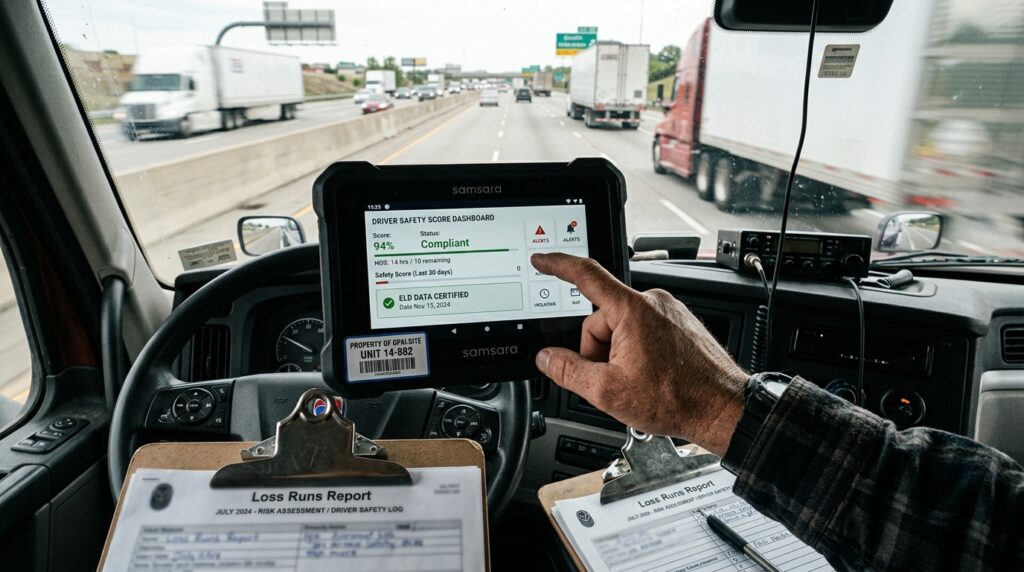
Your loss runs report is the exact operational equivalent of a corporate financial audit. It is a certified, verified 3-to-5-year record issued by your previous insurance carriers documenting every claim filed, along with the net financial payouts. If your loss runs show zero active or open claims, you command the leverage needed to bypass standard marketplace rates and negotiate preferential pricing brackets with premium carriers like Sentry or Travelers.
3. Motor Vehicle Records (MVR) and Safety Logs
You can run a highly organized corporate back-office, but if your hired drivers have speeding tickets, lane violations, or logbook infractions on their personal records, the underwriting algorithm will classify your operation as a high-risk venture. Platforms like Progressive are built to onboard new ventures and diverse MVR histories seamlessly, but their entry-level base premiums reflect that added liability exposure.
Step-by-Step Execution: How to Audit and Compare Your Rates
If your annual policy renewal is approaching, or if you are setting up a brand-new commercial transportation venture, execute your rate comparison systematically to beat the marketplace average.
Step 1: Secure Certified Loss Runs 45 Days Early
Formally request a signed copy of your official Loss Runs reports from your current agent or broker at least 45 days before your policy expiration date. If minor, closed incidents appear on the report, compile the corresponding structural proof showing that the issues were fully resolved and corrected. Do not let a new underwriter make inaccurate assumptions about old data.
Step 2: Leverage Your ELD Telematics Portals
Modern insurance underwriters do not quote blindly anymore; they want live vehicle telematics. Extract the historical safety performance reports from your Electronic Logging Devices (ELD) such as Samsara, Motive, or Geotab. When you enroll in data-sharing initiatives like Progressive’s Smart Haul, the platform uses your actual over-the-road safety scores to grant immediate upfront credits on your annual premium.
Step 3: Optimize the Deductible Matrix
If your business cash flow is structurally sound, shift away from standard $1,000 deductibles and request quotes structured around a $2,500 or $5,000 deductible framework. By electing to cover minor, low-cost physical damages out of pocket, you signal to the underwriting team that you are not going to file small administrative claims. This operational adjustment typically triggers an immediate 10% to 15% reduction in your overall base premium.
Practical Case Study: How an Optimization Audit Saved $14,000
Let’s look at a real-world scenario. A small, regional 5-truck logistics carrier operating out of North Carolina was facing an annual renewal quote of $62,000 ($12,400 per power unit) from their legacy broker, who claimed that marketplace volatility made rate increases unavoidable.
Instead of accepting the invoice, the fleet operator ran a structured indexing audit:
- They integrated their Motive ELD safety metrics directly into premium digital quoting interfaces.
- They cleared two minor data discrepancies on their historical loss runs by providing carrier-signed closure notices.
- They restructured their physical damage deductible threshold from $1,000 to $2,500, absorbing small maintenance items internally.
The Strategic Outcome: By submitting these pristine data packets to alternative B2B carrier nodes including Travelers, the fleet locked in a verified annual package premium of $48,000. The company protected their exact coverage layers while redirecting $14,000 back into operational cash reserves.
Common Risks: Blunders to Avoid During Insurance Shopping
Many commercial fleet owners inadvertently trigger automated red flags in underwriting systems due to a few basic processing errors:
- Neglecting FMCSA Filings: For interstate operations, proper compliance filings (such as the BMC-91 or Form H) must process smoothly through the FMCSA network. If an unorganized broker allows these filings to lag, your Department of Transportation (DOT) number can face temporary suspension alerts. Once a DOT number is flagged, premium tier carriers will completely lock you out of competitive rate structures.
- Chasing Low Rates at the Expense of Policy Exclusions: Extremely cheap quotes frequently hide catastrophic policy exclusions in the fine print. Watch out for clauses like Radius Restrictions or Specified Driver Warranties. If a policy excludes claims occurring beyond a 200-mile zone, and your truck suffers an accident at mile 205, your carrier is legally entitled to deny the entire claim.
- Waiting Until Last-Minute Renewal Windows: Requesting quotes 48 hours before your current policy lapses puts you at a massive structural disadvantage. Fleet underwriters can easily identify a rushed application, and they will price the sudden risk with a high-margin emergency premium bracket.
Final Takeaway
Commercial fleet insurance is no longer a fixed, unchangeable operating cost. In today’s digital transportation logistics landscape, pricing is entirely a game of structured data tracking and proactive benchmark metrics. If you maintain transparent safety tracking, clean up your regulatory filing histories, and utilize the automated parameters within the Annual Commercial Fleet Premium Index, you will consistently beat the market average.
When your next renewal notification arrives, skip the automated signature. Extract your fleet’s clean telematics logs, run your profile through competitive B2B directory nodes, and optimize your deductible framework. Keep your hard-earned trucking profits inside your business instead of letting them evaporate into unnecessary premium overhead.