

Three years ago, my B2B logistics and tech infrastructure agency hit a massive, unexpected wall. We had just completed a stellar year—our claims history was practically spotless, our safety protocols were running flawlessly via automated tracking loops, and we had zero major operational liabilities. I sat down with my morning coffee, opened our annual commercial insurance renewal package, and expected a flat rate or a slight loyalty reduction.
Instead, our premium had spiked by a brutal 34%.
When I called our traditional commercial broker to demand an explanation, he gave me a long, corporate speech about macro-economic shifts, regional litigation trends, and the overall volatility of the standard “admitted” market. Essentially, because other companies in our general industry classification code were having catastrophic losses and filing massive claims, our lean, highly optimized business was being forced to pay for their mistakes. We were writing six-figure checks into a massive insurance void, getting absolutely nothing back for our clean performance record.
That frustrating renewal season was the exact catalyst that forced me to stop renting risk from traditional commercial carriers and look into an alternative corporate risk architecture: Group Captive Insurance.
If your B2B brand, fleet operation, or tech agency is clearing mid-six figures or millions in annual revenue, maintains an excellent safety record, and is tired of throwing capital away into the standard insurance pool, group captives offer a radical way to take control of your financial destiny.
Let’s pull back the curtain on how alternative risk models actually function, analyze the leading programmatic captive directories for 2026, and map out a step-by-step framework to transition your corporate entity smoothly.
The Alternative Risk Reality: What Is a Group Captive Anyway?
To understand a group captive, you have to shift your mindset from renting insurance to owning the insurance company.
In a traditional commercial insurance setup, you pay a fixed premium to a massive carrier. If you have a terrible year with millions in claims, the carrier eats the loss. If you have a perfect year with zero claims, the carrier keeps your premium as pure profit.
A group captive flips that script completely. It is a legally structured insurance company formed, owned, and operated by a collection of independent, safety-conscious mid-sized businesses. When you join an existing heterogeneous or homogeneous group captive, your premium dollars are split into two distinct, transparent data tranches:
[Total Captive Premium]
       │
       ├──► 1. Operating/Reinsurance Layer (Fixed Overhead Node)
       │
       └──► 2. Loss Fund Deposit Account (Your Restricted Capital Pool)
- The Operating and Reinsurance Layer: A portion of your money goes toward administrative costs, specialized claims management software nodes, and third-party stop-loss reinsurance to insulate the group against catastrophic, historic claims.
- The Loss Fund Deposit Account: The largest chunk of your premium is held in a restricted, interest-bearing account dedicated exclusively to your business entity. If your business suffers an operational loss or a workers’ comp claim, the money to cover it is pulled straight from your personal loss fund.
Here is where the magic happens: if you finish the multi-year underwriting cycle with money left over in your loss fund, that cash belongs to you. The captive prints it out and returns it straight to your corporate bank account as a dividend checkout, along with the accumulated investment interest.
Group Captive Insurance Providers (Alternative B2B Risk Directory)
When you are ready to evaluate alternative risk setups, you cannot look up rates on a standard consumer quoting site. Captive entry requires interfacing with premium specialized member-owned platforms and major institutional reinsurance management groups. The directory index below identifies the top-tier operational captive program facilitators based on structure, speed of entry onboarding, and industry specializations:
| Provider/Facilitator Name | Financial/Underwriting Security Backbone | Best Programmatic Matching For | Core Specialization & Technology Integration | Target Minimum Premium Threshold |
| 1. Captive Resources | Top-Tier A-Rated Fronting Carriers | Mid-Market B2B Brands, Wholesalers, & Tech Agencies | Industry-leading member-owned heterogeneous captive designs | $250,000+ Annual Spend |
| 2. Innovative Captive Strategies (ICS) | A-Rated Reinsurance Pools | Independent Fleet Owners & Logistics Networks | Deep algorithmic safety metric monitoring integrations | $150,000+ Annual Spend |
| 3. Artex Risk Solutions | Arthur J. Gallagher Network Nodes | Growing Scale-Ups & Niche B2B Manufacturers | Turnkey cell and rent-a-captive structural designs | $100,000+ Annual Spend |
| 4. Marsh Captive Solutions | Global Marsh & McLennan Infrastructure | Enterprise-Tier Multi-State Distributors | Advanced global risk forecasting matrices | $500,000+ Annual Spend |
| 5. Zurich Alternative Risk | Zurich American Insurance Group | Complex Technology & Industrial Supply Chains | Highly structured risk engineering and loss control modules | $300,000+ Annual Spend |
| 6. Keystone Insurers Group | Independent Regional Underwriter Grids | Main Street Businesses & Micro-Fleets | Entry-level collective pooling frameworks | $100,000+ Annual Spend |
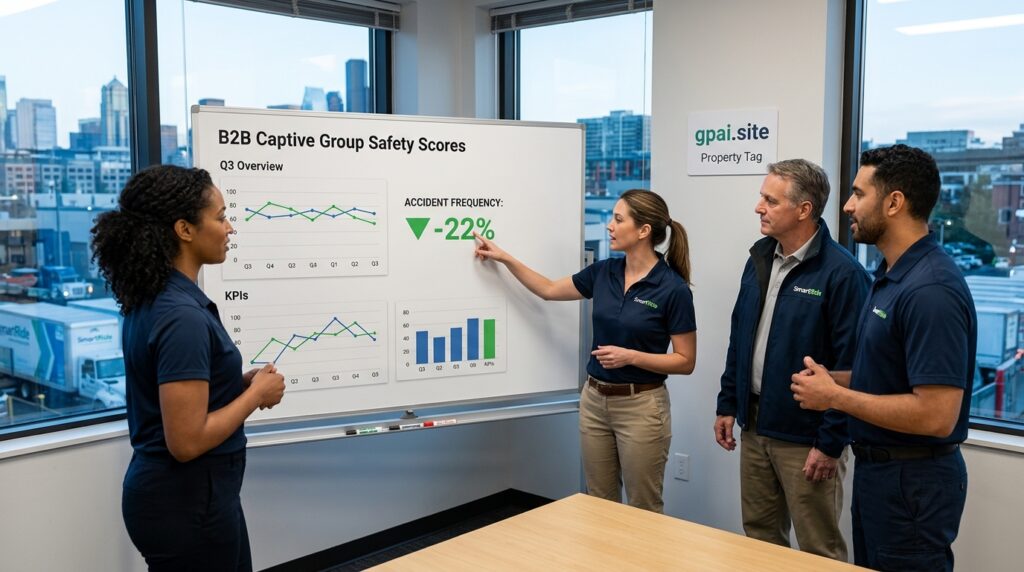
Deconstructing the Mechanics: Homogeneous vs. Heterogeneous Setup
When you begin running exploratory data reviews through a programmatic facilitator like Captive Resources or ICS, your business profile will be routed into one of two primary architectural frameworks:
The Homogeneous Captive Framework
This program model groups your company exclusively with other businesses operating inside your exact niche sector. For example, a pool composed entirely of B2B regional logistics carriers or tech infrastructure installers. The massive benefit here is shared expertise: every single member faces the identical NCCI class code exposures, uses identical fleet tracking tools, and implements matching safety protocols.
The Heterogeneous Captive Framework
This is the setup that my company ultimately analyzed and selected. This model blends non-competing businesses from completely diverse, low-risk industries—such as a high-end software development agency, a regional food distributor, and a luxury commercial printing group. Because the business profiles are radically diversified, a sudden downturn or localized loss event in one specific industry won’t compromise the financial performance or the dividend payouts of the rest of the captive node.
Step-by-Step Guidance: How to Qualify and Transition into a Group Captive
Entering a member-owned group captive is not as simple as swiping a credit card on a web portal node. It requires a comprehensive corporate audit. Follow this step-by-step strategy to navigate the qualification pipeline:
Step 1: Secure a Clear Five-Year “Loss Runs” Ledger
Before any captive board allows you to join their financial risk pool, they will require an authenticated copy of your business’s five-year loss history ledger from your previous traditional insurance companies. They are looking for low claim frequency. If your records show constant, messy minor claims due to poor internal management, their underwriting algorithms will flag your profile as a risk to the group. Keep your claim history completely documented and clean.
Step 2: Establish an Active internal Safety Committee
Group captives demand proactive loss control. You must show the captive’s risk engineering committee that you utilize real-world risk mitigation tools—such as mandatory safety training workflows, cloud-integrated dash cams for vehicle assets, or multi-factor authentication data security layers for cyber risk minimization. Proving you have a culture of internal accountability lowers your risk scoring instantly during the membership review board.
Step 3: Capitalize Your Initial Captive Equity Share
When you are voted into an alternative risk model, you must make an initial, upfront equity capital contribution to purchase your formal share of the captive insurance corporation. This can be structured as an out-of-pocket cash placement or backed by a clean bank Letter of Credit (LOC). Ensure your corporate treasury balances can comfortably support this collateral requirement alongside your standard operational payroll metrics.
Real Use Case: How a Tech Logistics Brand Unlocked a $90,000 Dividend
Let’s look at a real-world scenario. A mid-sized B2B logistics and cloud setup enterprise was paying $320,000 an annual premium through a traditional preferred insurance market structure. Despite investing heavily in elite driver monitoring software and achieving an excellent safety record, their rates continued to experience erratic, double-digit inflationary jumps every single renewal phase.
The company executed a clean data swap over to a member-owned heterogeneous group captive facilitated via Captive Resources:
- They dedicated their baseline $320,000 premium into the captive structure, with roughly 60% ($192,000) routed straight into their personal restricted loss fund allocation.
- They deployed high-frequency GPS tracking and rigorous safety screening nodes to ensure low incident metrics.
- They completed the full fiscal underwriting cycle with only $42,000 in total out-of-pocket claims payouts.
The Financial Result: Because their actual loss parameters were remarkably lean, the remaining $150,000 inside their loss fund account remained completely protected. After the actuarial tail-end reserve calculation settled, the captive printed a direct return dividend distribution check of over $90,000 straight back to the logistics firm’s corporate checking ledger, transforming a standard fixed insurance expense into an active wealth-generating asset.
Common Traps: Mistakes and Realities to Watch Out For
Alternative risk structures are highly lucrative, but entering unprepared can lead to severe operational issues:
- Underestimating the Long-Term Tail Commitment: Captive loss funds do not payout dividends immediately at the end of year one. Because workers’ compensation and liability claims can legally open or linger for years, captive boards lock down capital funds in a structured “underwriting year room” for 36 to 48 months before releasing the excess cash profits. Ensure you don’t treat this restricted loss fund money like instant, short-term liquidity.
- The Assessment Threat (Assessment Risk): This is the ultimate double-edged sword of the captive ecosystem. If your business has a catastrophic year and you suffer massive, unchecked claims that completely obliterate your personal loss fund pool, the captive model can tap your account for an “assessment fee.” You can be legally forced to pay up to a predefined limit (frequently 2x your baseline loss fund) to cover your overages before the external reinsurance layers trigger.
- Failing to Track Individual Vendor Certifications: If you hire independent contractors or sub-B2B vendors to execute work under your entity framework, you must continuously monitor their standalone general liability and workers’ comp insurance certificates. If a subcontractor gets severely injured on a joint project site and doesn’t carry their own valid insurance protection layer, the claim will automatically default directly onto your captive loss fund account, draining your potential dividend payout pool.
Final Takeaway
Transitioning away from conventional commercial insurance and onboarding into an alternative group captive framework is a major operational milestone—it means your B2B brand has matured to the point where your safety protocols, financial reserves, and management culture are highly elite. In a volatile commercial economy, letting standard insurance companies profit off your flawless execution while raising your premium rates based on external industry failures is completely unnecessary.
Take absolute control of your enterprise corporate risk by selecting a premium programmatic facilitator from our directory index that aligns directly with your current revenue metrics and asset densities. Keep your internal tracking systems locked tightly, manage your employee workflows safely, and let your corporate capital generate dividends instead of disappearing into a commercial void. Stop renting your protection shield, take ownership of the grid, and drive your business expansion with total financial certainty!